Introduction
Ever wondered how those massive metro tunnels get built so quickly and precisely? Walk through any metro station in Delhi or Mumbai, and you’ll see smooth, uniform walls stretching hundreds of meters. That consistency doesn’t happen by accident.
Traditional tunnel building is slow, labor-intensive, and honestly, a bit outdated for India’s current infrastructure needs. You’d need massive crews working for months on what modern tunnel formwork construction accomplishes in weeks. From underground metros to highway tunnels cutting through mountains, this technology is literally changing how we build beneath the surface.
Here’s the thing most people don’t realize: not all tunnel formwork systems deliver the same results. Some finish projects on time while others cause delays and budget overruns. The difference? It comes down to the tunnel formwork system in India you choose and who’s behind it.
This guide covers everything about tunnel formwork construction – how the technology actually works, what makes a system reliable, and how to choose equipment that won’t let you down halfway through a project.
How Tunnel Formwork Technology Works Compared to Conventional Methods?
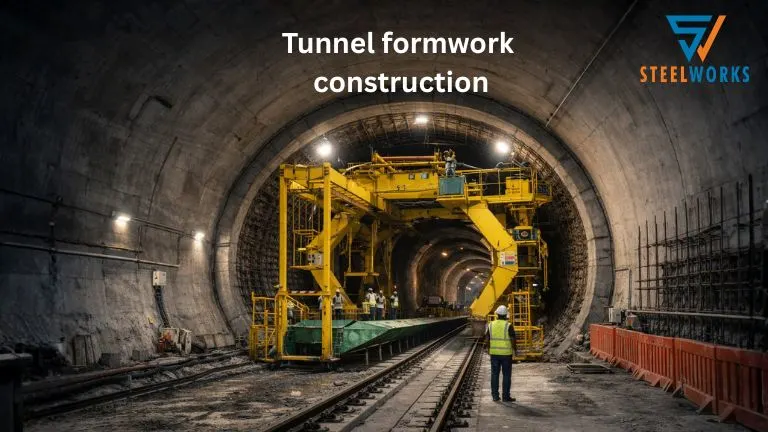
Think of tunnel formwork construction as using a giant, reusable mold for concrete. But instead of making small objects, you’re creating massive tunnel walls and ceilings in one go.
The Old Way of Building Tunnels
Traditional construction means building formwork from scratch for each section. Workers assemble timber or basic steel frames piece by piece, align everything carefully, pour concrete, wait for it to cure, then dismantle the whole setup before moving to the next section. Repeat hundreds of times.
It works, sure. But it’s painfully slow. A single tunnel section might take a full week from start to finish. Multiply that across a kilometer-long tunnel, and you’re looking at months or even years.
How Modern Systems Change Everything
Tunnel formwork technology uses hydraulically powered steel systems that move as one integrated unit. Instead of rebuilding formwork every time, these systems travel along the tunnel casting concrete sections in quick succession.
The difference is dramatic. Traditional methods: 5-7 days per section. Tunnel formwork systems: 1-3 day cycles. That’s finishing in half the time or less.
But speed isn’t the only benefit. Manual formwork varies based on who’s building it that day. Hydraulic systems deliver identical dimensions every single time. Your tunnel doesn’t have thick spots in one area and thin spots in another.
Labor requirements drop significantly too. Conventional methods need large crews for assembly and dismantling. Automated systems operate with smaller, skilled teams. Fewer workers in confined underground spaces means better safety.
And here’s something project managers love: quality steel formwork gets reused hundreds of times across multiple projects. Timber formwork might survive 5-10 uses before falling apart. That reusability drastically reduces per-meter costs on long tunnels.
What Defines a Reliable Tunnel Formwork System in India?
Not every tunnel formwork system performs the same. India’s diverse projects – from Himalayan mountain tunnels to coastal metros – need equipment that handles varied conditions without constant breakdowns.
Build Quality Matters
Steel formwork dominates Indian tunneling for good reason. It takes a beating, withstands extreme conditions, and keeps working cycle after cycle. Cheap systems save money upfront but cost you in downtime and repairs.
The hydraulic components control everything – formwork movement, panel adjustment, pressure resistance during concrete pours. Reliable tunnel formwork systems use proven hydraulics that function in dusty, humid, high-temperature sites common across India. Cheap hydraulics fail frequently, causing costly delays while you wait for parts or repairs.
Flexibility for Different Tunnels
Tunnels aren’t one-size-fits-all. Metro tunnels need different shapes than highway tunnels or railway projects. Some require circular profiles, others rectangular or arch-shaped designs.
The best tunnel formwork system in India adapts to various geometries without requiring complete redesigns. Steelworks, for instance, handles everything from standard metro box sections to complex custom shapes for specialized applications.
Self-Propulsion Capabilities
Advanced systems include self-propelled mechanisms. This eliminates needing external equipment to move formwork between sections, speeding cycles significantly and reducing dependence on additional machinery that might be busy elsewhere.
After-Sales Support That Actually Responds
Equipment breaks down. Hydraulic lines leak. Panels get damaged during operation. The difference between a day’s delay and weeks of downtime? How fast your tunnel formwork manufacture company responds with parts and expertise.
Reputable manufacturers conduct thorough factory testing before shipping. They catch problems in controlled conditions rather than on your construction site where every day of delay costs money.
Key Design and Engineering Factors in Tunnel Formwork Construction
Successful projects depend on careful planning before the first concrete pour. These factors directly impact whether your tunnel formwork construction goes smoothly or becomes a nightmare.
Getting the Profile Right
The tunnel’s cross-sectional shape drives formwork design. Circular, rectangular, horseshoe, custom – each geometry requires specific panel configurations and support structures. Accurate surveying ensures formwork produces tunnels meeting exact specifications for clearances, drainage slopes, and structural requirements.
Concrete Properties
Your concrete mix design affects formwork pressure loads. Higher-strength concrete, faster setting times, specialized additives – all impact how formwork must be engineered to resist pressure without deformation. Get this wrong, and panels bulge or crack under load.
Cycle Time Optimization
Faster isn’t always better if quality suffers. Optimal cycle times balance concrete curing needs with formwork striking schedules and downstream operations like waterproofing. Properly engineered tunnel formwork systems achieve 1-3 day cycles consistently without compromising concrete quality.
Site Logistics
Tunnel construction sites are cramped. Formwork must assemble, operate, and move within tight spaces. Transport to site, assembly sequences, equipment storage – all require careful planning. This is where experienced tunnel formwork manufacture companies add real value. They design systems that actually fit your site logistics, not just theoretical specifications.
Integration with Other Work
Formwork doesn’t work in isolation. It must coordinate with excavation schedules, support systems, waterproofing applications, and grouting operations. Smart engineering ensures formwork cycles align with these activities, preventing bottlenecks that idle expensive equipment and labor.
Where Tunnel Formwork Technology Is Most Suitable in Indian Projects?
Tunnel formwork construction excels in specific applications. Understanding where this technology delivers maximum benefit helps you decide when to deploy it.
Mass Transit Systems
Metro rails in Delhi, Mumbai, Bangalore, Chennai – these projects rely heavily on tunnel formwork technology. Underground stations, running tunnels, connecting passages all benefit from the speed and quality this technology provides. When you’re promising citizens faster commutes, construction delays aren’t acceptable.
Highway and Road Tunnels
Hilly terrains like projects in Kargil, the Delhi-Amritsar-Katra Expressway, countless Himalayan road projects – all require safe, rapid tunnel construction. Tunnel formwork systems handle these challenging environments effectively, even when access is difficult and weather conditions are harsh.
Railway Projects
The triple-track tunnel formwork system used for the Rishikesh-Karnprayag Rail Tunnel demonstrates how this technology accommodates complex railway requirements including overhead electrification clearances and drainage systems. Traditional methods would struggle with such precision requirements.
Hydropower Infrastructure
Water diversion tunnels, penstock tunnels, power generation passages demand watertight, precisely dimensioned construction. Any leaks or dimensional errors cause serious problems. Tunnel formwork delivers the quality hydropower projects require.
When It Makes Most Sense
Long tunnel lengths where equipment reuse justifies initial investment. Repetitive cross-sections allowing standardized formwork. Tight project schedules demanding rapid construction. Quality requirements needing consistent finish and dimensions. Projects where reduced labor and increased safety provide value.
READ MORE- STEEL BRIDGES , PRE-ENGINEERED BUILDINGS
Conclusion
Tunnel formwork construction has changed how India builds underground infrastructure. The combination of speed, quality, safety, and cost-efficiency makes it essential for metro systems, highway tunnels, railways, and hydropower projects.
Choosing the right tunnel formwork system in India determines whether your project finishes on schedule or faces costly delays. Material quality, hydraulic reliability, geometric flexibility, engineering expertise, manufacturer support – these aren’t just technical specs. They’re the difference between success and problems.
Steelworks brings over 40 years of experience to tunnel formwork construction. We don’t just supply equipment and walk away. We engineer solutions for projects of all complexities, from simple geometries to the most intricate tunnel designs. Manufacturing, assembly, testing, painting, transportation – we handle everything, delivering fully automatic and mechanical systems matched precisely to your needs.
From the Dimapur Tunnel Project’s self-propelled systems to the Rishikesh-Karnprayag triple-track tunnel, we’ve proven our capabilities across India’s most demanding projects. Our commitment to quality materials, advanced technology, and solid project management ensures your tunnel formwork construction succeeds.
Whether planning metro extensions, highway tunnels through mountains, railway projects, or hydropower installations, selecting an experienced tunnel formwork manufacture company makes all the difference.
Contact Steelworks today to discuss your requirements. Let’s build India’s infrastructure together – faster, safer, and better.
What is a tunnel formwork system?
A tunnel formwork system is specialized equipment using steel frames, hydraulic mechanisms, and adjustable panels to create molds for concrete tunnel linings. It travels along the tunnel, repeatedly forming identical sections quickly and precisely, producing smooth concrete surfaces needing minimal finishing work.
What is tunnel formwork technology?
Tunnel formwork technology refers to modern, hydraulically-powered formwork systems that automate and accelerate tunnel lining construction. Unlike conventional methods, this technology uses self-propelled, reusable formwork delivering 2-5x faster construction with superior quality, consistency, and safety compared to traditional techniques.
What are the advantages of using tunnel formwork over traditional methods?
Tunnel formwork offers faster construction (1-3 day cycles vs 5-7 days), superior finish quality eliminating plastering needs, consistent dimensions across entire tunnels, reduced labor requirements, enhanced safety through mechanization, and reusability across hundreds of casting cycles, significantly lowering per-meter costs for long tunnels.
How do I choose the right tunnel formwork manufacturer in India?
Choose manufacturers with proven track records on similar projects, quality steel construction, reliable hydraulic systems, geometric flexibility for your tunnel profile, comprehensive testing protocols, strong after-sales support, and experience with Indian site conditions. Companies like Steelworks with 40+ years experience provide confidence and reliability.