tunnel formworks
building excellence
For over 40 years, STEEL WORKS has been the driving force behind groundbreaking tunnel construction projects across the globe. We are leaders and implementers of innovative Tunnel Lining Formwork systems, equipped to tackle any challenge.
From straightforward geometries to the most intricate tunnel shapes, there’s no project too complex for STEEL WORKS. We don’t just deliver equipment; we deliver success.
Complete
Solution Provider
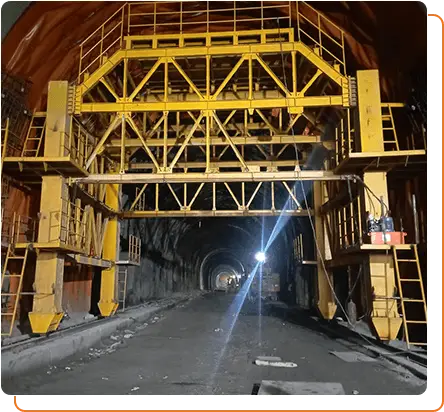
Consider us your one-stop for tunnel formwork needs. We handle the entire project lifecycle, from initial design and conceptualization to on-site supervision during construction. This includes manufacturing, assembly & testing, painting, and transportation.
If you are still planning your project, our tunnel formwork construction guide walks through how the formwork cycle works on site, from setup to striking.
Unmatched Versatility
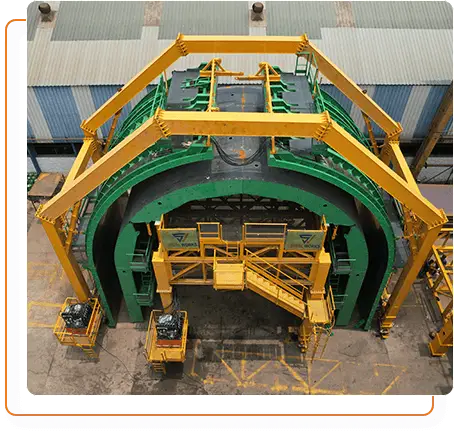
We offer a comprehensive range of both fully automatic and mechanical Tunnel Lining Formwork systems. No matter the tunnel profile you require, we have the perfect solution to fit your needs.
Global Experience,
Local Expertise
With decades of experience under our belt, STEEL WORKS has a proven track record of delivering exceptional formwork solutions across India and international markets. We understand the unique demands of diverse projects and locations.

Skilled Workforce
Training
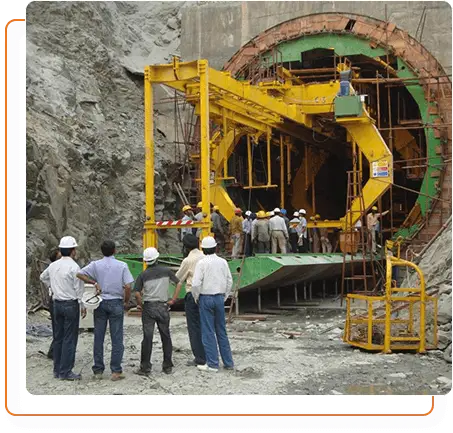
Our commitment extends beyond equipment. We believe in empowering your team. We offer comprehensive training programs to ensure your workforce can operate our systems efficiently and safely, maximizing productivity and minimizing risks.
How the Tunnel Formwork System Works
A tunnel formwork system for tunnel lining uses a steel form shaped to the profile of the tunnel. The form is set up inside the excavated tunnel, and concrete is placed in the space between the form and the excavated surface to cast the lining. The shape of the form decides the finished inner profile of the tunnel, so the form is designed to match the profile the project requires.
Once the concrete has cured, the form is released from the lining. On a fully automatic system this is done hydraulically, and on a mechanical system it is done by mechanical means. The form is then moved to the next segment, and the same cycle repeats along the length of the tunnel.
Steelworks offers both fully automatic and mechanical Tunnel Lining Formwork systems, so the system can be chosen to suit the tunnel profile and the way the site works. Share your tunnel profile and drawings, and our team will advise on a suitable tunnel formwork system.
Tunnel Formwork Construction Cycle
Tunnel formwork construction follows a repeating cycle, with the form working segment by segment along the tunnel. Each step is planned so that the form keeps moving and the lining progresses in an orderly way.
- Move the form to the next segment.
- Align the form and set it to the tunnel profile.
- Fix the end shutters at the ends of the segment.
- Place and compact the concrete between the form and the excavated surface.
- Cure the concrete until the form can be released.
- Strike the form, then move it on to the next segment.
Careful alignment before each pour matters because it controls the quality of the finished lining. Our on-site supervision and training help your crew follow the cycle safely and consistently. For a step-by-step view of the process on site, read our tunnel formwork construction guide.
Tunnel Formwork Components We Supply
A typical tunnel formwork system is made up of a few main parts that work together. The form shell is the steel skin that gives the lining its profile. A supporting gantry or carriage carries the form and holds it in position. Hydraulic or mechanical adjustment sets the form to the profile and releases it after curing. End shutters close the ends of each segment, and a travel system moves the form from one segment to the next.
Steelworks offers fully automatic and mechanical systems, and our scope covers design, manufacturing, assembly and testing, painting, transportation, site supervision and training. Share your tunnel profile and drawings, and our team will confirm the system that suits your project. For a closer look at the technology, read our guide to tunnel formwork systems in India.
Where Tunnel Formwork Is Used: Road, Rail, Metro and Underground Tunnels
Tunnel lining formwork is used wherever a tunnel needs a consistent concrete lining over a long length. Road tunnels, rail tunnels, metro tunnels and other underground tunnels all rely on this kind of formwork, because the same profile repeats segment after segment and the form can be reused along the whole alignment.
Each type of tunnel has its own profile, and the formwork is designed to fit it. Steelworks offers fully automatic and mechanical systems so that straightforward geometries and more intricate tunnel shapes can both be covered. Tell us the tunnel type, profile and drawings, and we will advise on a suitable tunnel formwork system for your project.
Tunnel Formwork FAQs
What is tunnel formwork?
Tunnel formwork is a steel form shaped to the profile of a tunnel and used to cast the concrete lining. The form is set up inside the excavated tunnel, concrete is placed between the form and the excavated surface, and after curing the form is released and moved to the next segment.
What is the difference between automatic and mechanical tunnel formwork systems?
Both systems cast the same kind of lining. On a fully automatic system the form is adjusted and released hydraulically, while on a mechanical system this is done mechanically. Steelworks offers both, so the choice can be matched to the tunnel profile and the needs of the project.
What does Steelworks supply for tunnel formwork?
Steelworks covers design, manufacturing, assembly and testing, painting, transportation and on-site supervision during construction. We also offer training so your team can operate the systems efficiently and safely.
Which tunnels use tunnel formwork?
Road, rail, metro and other underground tunnels use tunnel lining formwork. The system is designed to match the tunnel profile, from straightforward geometries to more intricate tunnel shapes.