
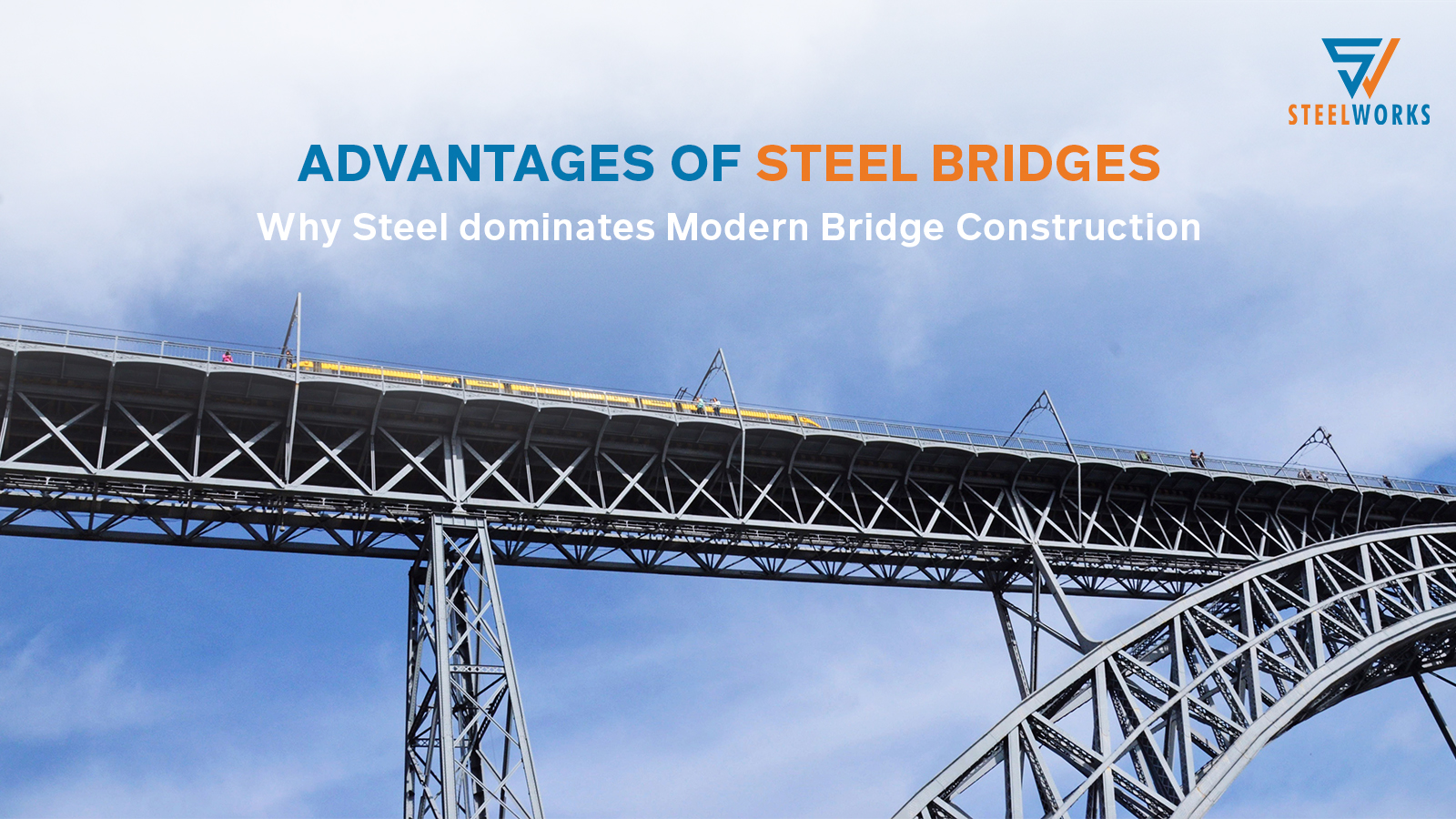
Bridges do way more than just connect two points – they connect entire communities, economies, and possibilities. Drive across any major river or valley and you’re probably traveling over a steel bridge. From the Golden Gate (yeah, that famous one) to countless highway overpasses nobody really notices, steel has become the default choice for bridge construction.
But why steel, though? We’ve got concrete, wood, and other materials sitting right there. What makes steel so special? Turns out, there’s this unique mix of strength, versatility, and practical benefits that other materials just can’t deliver. Understanding the advantages of steel bridges helps explain why engineers keep choosing this material for everything from tiny pedestrian walkways to massive suspension bridges spanning several kilometers.
Why Steel Beats Other Bridge Materials?
Steel didn’t accidentally become the top bridge material. There are some pretty fundamental reasons why it outperforms alternatives like concrete, wood, or stone.
Strength Without the Weight Steel packs incredible strength while staying relatively light compared to concrete or stone. This isn’t just a minor perk – it changes everything about bridge design. Lighter structures need less beefy foundations, smaller support structures, and often end up costing less overall. A steel bridge can span way longer distances with fewer support columns than a concrete bridge does.
Speed of Construction Time equals money in construction. Always has, always will. Steel bridge parts get made off-site in controlled factory settings, then shipped and assembled fast on location. Compare that to concrete bridges needing all that on-site formwork, pouring, waiting for curing. Steel bridges go up in weeks where concrete might drag on for months.
Design Freedom Steel bends to your will (literally and figuratively). It can be shaped, welded, configured in ways that concrete or wood simply can’t match. Complex curves? Unusual angles? Innovative designs that push boundaries? Steel handles all of it. This flexibility lets architects and engineers create structures that work great AND look amazing.
Spanning Long Distances Need to cross a wide river or deep valley? Steel’s your friend. The material’s high tensile strength lets it handle the massive forces involved in spanning great distances with minimal support points in between.
Actually Recyclable Unlike concrete that eventually becomes landfill waste, steel is completely recyclable. Old steel bridges get dismantled, and the material goes right back into use. Pretty responsible choice considering how much we’re thinking about sustainability these days.
Advantages of Steel Bridges
The advantages of steel bridges in construction go beyond just the material itself. Here’s why they perform so effectively:
Handles Heavy Loads Like a Champ Steel bridges deal with heavy traffic exceptionally well. Trucks, trains, and constant vehicle flow – steel structures absorb and spread out these loads efficiently. The material’s high tensile and compressive strength means bridges stay stable and safe even when getting hammered by extreme loads.
Built to Last Maintained properly, steel bridges stick around for 50-100 years or more. Modern protective coatings fight off corrosion, and the material itself doesn’t rot like wood or crack like concrete. Plenty of steel bridges built a century ago are still carrying traffic today after just routine maintenance.
Shrugs Off Weather Steel bridges handle harsh weather better than most alternatives. Freezing temps to tropical heat, heavy snow to coastal salt air – treated steel deals with environmental extremes that would trash other materials pretty quick.
Earthquake Friendly In areas where earthquakes happen, steel’s flexibility becomes absolutely critical. Unlike rigid concrete that cracks and fails during quakes, steel bends and flexes, soaking up seismic energy and then bouncing back to its original shape. This ductility makes steel bridges way safer in earthquake-prone zones.
Lighter Foundation Needs Steel bridges weigh less than concrete ones, so they need smaller, cheaper foundations. This really matters when building over water or on soft soil, where massive foundation work would cost a fortune.
Can Be Modified Later Need to widen a bridge or add lanes down the road? Steel structures can be modified and expanded more easily than concrete. Welding on additional sections or beefing up existing ones is pretty straightforward with proper engineering.
Predictable Behavior Steel’s properties are well-understood and consistent. Engineers can nail down exactly how a steel bridge will behave under different conditions, making the design more reliable and safety calculations more accurate.
Different Steel Bridge Types and What They’re Good For
Different steel bridge designs fit different situations. Looking at these types shows just how versatile steel really is in bridge construction.
Truss Bridges These use interconnected steel triangular units creating rigid frameworks. Benefits? Exceptional strength for their weight, can span long distances, use materials efficiently, and have proven reliability in countless applications worldwide.
Arch Bridges Steel arch bridges push loads through compression into supports at each end. Advantages include great looks, ability to span wide gaps, need less material than beam bridges, and work perfectly for crossing gorges and valleys.
Suspension Bridges Cables hung from towers support the bridge deck. The advantages of steel bridges really shine here – can span extremely long distances (we’re talking several kilometers), handles wind and movement flexibly, looks iconic, and distributes loads efficiently through those cables.
Cable-Stayed Bridges Similar concept to suspension bridges but cables connect directly from towers to the deck. Perks include faster construction than suspension types, excellent stability, modern appearance, and work great for medium to long spans.
Cantilever Bridges Sections stick out horizontally from supports, meeting in the middle. Benefits? It can build from both sides at once, doesn’t need temporary supports during construction, and handles deep water or tricky terrain effectively.
Beam Bridges Simplest design – horizontal beams across vertical supports. Advantages include straightforward construction, lower costs for short spans, easy maintenance, and reliable performance for routine applications.
Each steel bridge type maximizes the advantages of steel bridges for specific situations – how far it needs to span, load requirements, terrain challenges, aesthetic goals, and budget constraints.
Steel Bridge Advantages and Disadvantages
Let’s be real about limitations. While the advantages of steel bridges clearly win out, some downsides do exist:
Upfront Costs Can Be Higher Steel bridges sometimes cost more initially compared to basic concrete designs. Quality steel and skilled fabrication require investment. Though faster construction often balances this out through reduced labor and time costs.
Rust is Real Unprotected steel corrodes, especially in humid areas or near saltwater. Needs regular maintenance – painting, coating, inspections. Modern protective treatments help tons, but maintenance stays necessary.
Temperature Affects It Steel expands when hot, contracts when cold. Bridge designs must handle this movement through expansion joints and careful engineering. Adds complexity but totally manageable with proper design.
Needs Skilled Workers Steel bridge construction requires skilled fabricators and welders. Not every contractor has the necessary expertise, which can limit options in some regions.
Can Be Noisy Some steel bridge designs create more traffic noise than concrete alternatives. Deck design and surface choices can help with this though.
Despite these issues, the advantages and disadvantages of steel bridges heavily favor steel for most projects. The drawbacks are workable with proper design and maintenance, while the benefits fundamentally enable bridge projects that wouldn’t otherwise be feasible.
Why Steelworks Makes Sense for Bridge Fabrication?
When the advantages of steel bridges in construction convince you to move forward, picking the right fabrication partner becomes crucial. Steelworks brings specialized know-how in bridge steel fabrication and installation.
Years working with structural steel translate directly into bridge construction quality. Understanding stress points, load distribution, welding requirements, connection details – this expertise ensures bridges perform as designed for decades.
Steelworks runs advanced fabrication facilities with precision cutting, forming, and welding equipment. This allows manufacturing complex bridge components to exact specs, ensuring pieces fit together perfectly during on-site assembly.
Quality control verifies every component meets engineering specifications. Material testing, checking dimensions, inspecting welds – comprehensive checks happen before any piece leaves the shop.
The team gets the practical challenges of bridge construction. From moving oversized components to sequencing installation for safety and efficiency, Steelworks brings real-world problem-solving to projects.
Working smoothly with engineers and contractors keeps projects moving. Clear communication, sticking to schedules, and flexibility addressing inevitable field challenges help things stay on track.
Wrapping Up
The advantages of steel bridges explain why they dominate modern infrastructure. Better strength-to-weight ratios, faster construction, design flexibility, long spans, durability, and earthquake resistance make steel the obvious choice for most bridge applications.
Different types – truss, arch, suspension, cable-stayed, cantilever, and beam designs – optimize these advantages for specific situations. Understanding steel bridge advantages and disadvantages helps everyone involved make smart decisions, balancing performance, cost, and practicality.
Some disadvantages exist in initial costs, maintenance needs, and specialized requirements. But these are totally manageable with proper planning and expertise. The overwhelming benefits of steel bridges in construction keep driving their use in projects worldwide.
Whether crossing rivers, spanning valleys, or connecting communities, steel bridges deliver reliable, durable, efficient infrastructure serving societies for generations. The material’s unique properties make it irreplaceable in modern bridge construction, literally connecting our world one span at a time.
Read Also : Top Pre-Engineered Building Solutions | Trusted Company in India