
Introduction
Ever traveled by train across a river or valley and wondered about that massive structure carrying hundreds of tons of moving weight? That’s a steel railway bridge doing something extraordinary – holding up not just static weight but dynamic loads that shift, vibrate, and pound away constantly.
India’s railway network is massive. We’re talking over 68,000 kilometers of track connecting cities, towns, and villages across diverse terrain. Rivers to cross, valleys to span, highways to bridge over – each needs robust structures handling heavy trains multiple times daily. Steel railway bridges form the backbone of this network, quite literally holding up one of the world’s largest transportation systems.
This guide explores steel railway bridge engineering, construction, and what makes them indispensable for modern rail networks. Whether you’re curious about infrastructure or involved in railway projects, understanding these structures reveals fascinating engineering solutions.
What Exactly is a Steel Railway Bridge?
A steel railway bridge is basically a structure built primarily from structural steel, designed specifically to carry railway tracks across obstacles like rivers, valleys, roads, or other railways. Unlike bridges for vehicles or pedestrians, railway bridges face unique challenges – massive concentrated loads from locomotives, constant dynamic forces from moving trains, and vibrations that test structural integrity continuously.
These aren’t simple structures. A freight train can weigh thousands of tons, and that weight moves across the bridge, creating dynamic loading completely different from static weight. Add wind forces, temperature variations, and sometimes earthquake considerations, and you’ve got seriously demanding engineering requirements.
Steel railway bridge details include several key components working together. Main girders or trusses form the primary load-bearing structure. Cross-beams distribute loads from the track. Deck systems support the actual railway track. Bearings allow thermal expansion and movement. Each component gets engineered precisely to handle specific forces and stresses.
Why Railway Bridges Need Steel Structures?
Several compelling reasons explain why steel dominates railway bridge construction globally and particularly in India.
Strength-to-Weight Ratio is Unmatched
Railway bridges need serious strength. A single freight locomotive can weigh over 100 tons. Add wagons and cargo, and you’re looking at thousands of tons rolling across. Steel provides exceptional strength while keeping the bridge’s own weight manageable.
This matters enormously. Lighter bridges need smaller foundations, reducing construction costs and time. They’re easier to build in difficult terrain where foundation work is challenging. That strength-to-weight ratio makes steel railway bridges practical where other materials would be prohibitively expensive or technically impossible.
Span Lengths Steel Achieves
Need to cross a wide river without support pillars in the water flow? Steel handles long spans that concrete or other materials can’t match economically. Steel girder railway bridge designs can span hundreds of meters with minimal intermediate support.
This capability is crucial for Indian railways crossing major rivers during monsoons when water flow is massive. Fewer pillars in the river mean less obstruction to water flow, reduced flood risks, and lower foundation costs in difficult riverbed conditions.
Construction Speed Matters
Railway projects operate under tight timelines. Traffic disruptions need to be minimized. Steel bridges get fabricated off-site in controlled factory environments, then transported and erected quickly. This speeds construction dramatically compared to concrete alternatives requiring extensive on-site formwork and curing time.
Pre-fabricated steel components arrive ready to assemble. Erection can happen in days or weeks rather than months. For railway projects where every day of line closure costs money and inconvenience, this speed advantage is huge.
Dynamic Load Handling
Trains don’t just sit on bridges – they roll across at speed, creating dynamic forces, vibrations, and impact loads. Steel’s properties handle these dynamic stresses exceptionally well. The material flexes slightly under load, then returns to its original shape (within design limits), absorbing and dissipating energy effectively.
This fatigue resistance is critical. Railway bridges face millions of load cycles over their lifetime. Steel maintains structural integrity under this repeated dynamic loading far better than many alternatives.
Maintenance and Inspection
Steel railway bridge structures allow for inspection and maintenance access. Components can be examined, protective coatings can be reapplied, and if needed, individual members can be repaired or replaced without rebuilding the entire structure.
Modern protective coatings and weathering steel grades minimize maintenance needs. Many steel railway bridges in India have operated for 50-100 years with appropriate maintenance, proving the material’s longevity.
Seismic Performance
In earthquake-prone regions, steel’s ductility becomes a critical safety feature. During seismic events, steel bridges bend and flex rather than crack and collapse like brittle materials. This ductility provides warning before failure and often prevents catastrophic collapse, protecting trains and passengers.
Types of Steel Railway Bridge Construction in India
Steel railway bridge construction in India uses several proven designs, each suited to specific situations.
Plate Girder Bridges
These use welded or bolted steel plates forming I-shaped or box-shaped girders as main load-bearing members. Simple, economical, and effective for short to medium spans (typically up to 50 meters). You’ll see these everywhere across Indian railways for smaller river crossings and road overbridges.
The straightforward design makes fabrication and erection relatively simple. Maintenance is manageable since girder surfaces are accessible for inspection and painting.
Truss Bridges
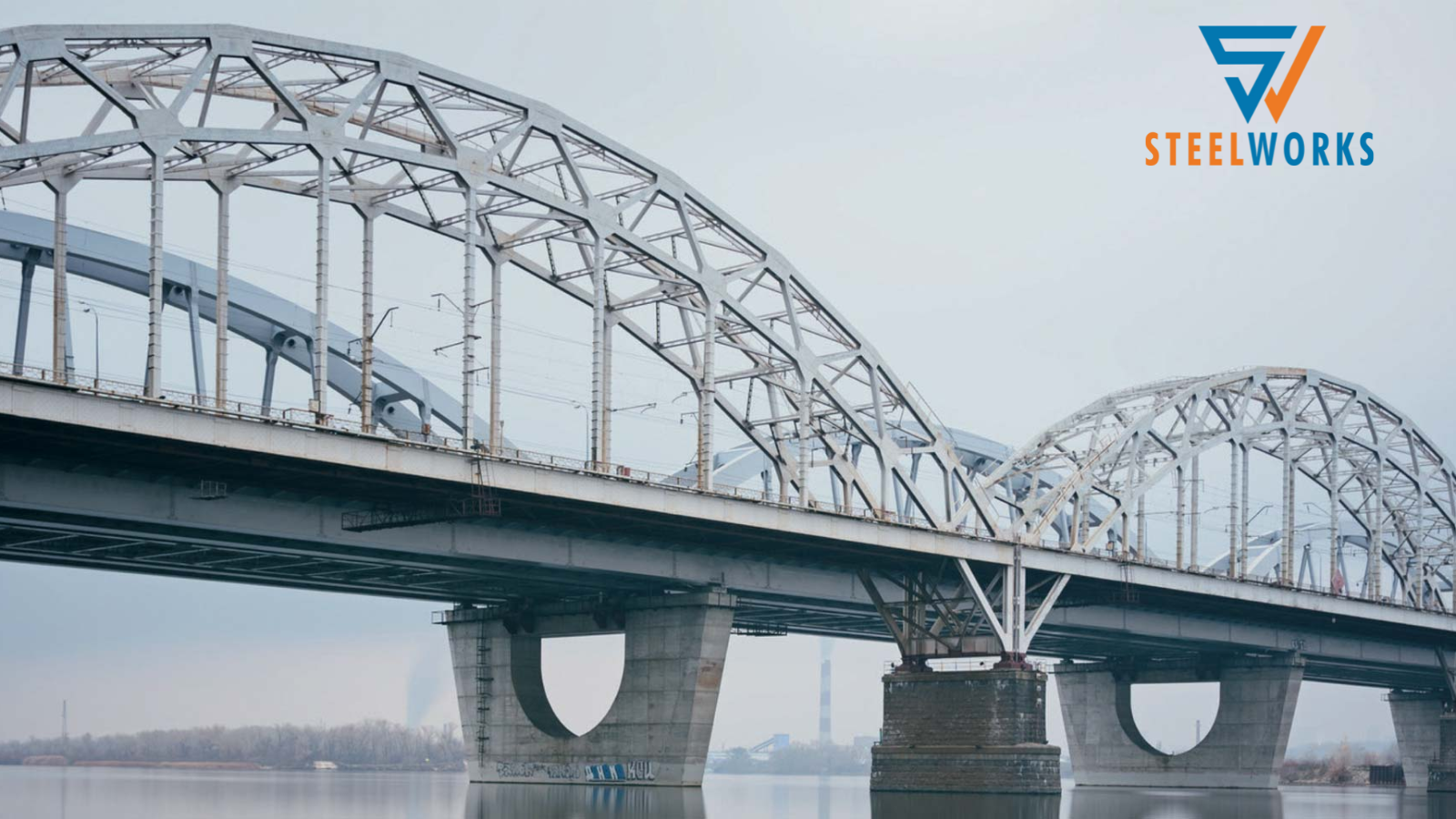
Steel truss railway bridges use triangulated frameworks of steel members creating rigid structures. Trusses handle longer spans (50-150 meters or more) efficiently by distributing loads through tension and compression in different members.
Many iconic steel railway bridges in India use truss designs. They’re visually distinctive with their lattice-like appearance. While more complex to fabricate than plate girders, trusses provide excellent strength for their weight in longer span applications.
Arch Bridges
Steel arch designs transfer loads through compression into abutments at each end. Arches can span significant distances with elegant profiles. Some of India’s most beautiful railway bridges use steel arch construction, combining structural efficiency with aesthetic appeal.
Box Girder Bridges
These use hollow box-shaped cross-sections providing torsional rigidity and efficient use of material. Common in modern railway bridge construction for medium to long spans. The enclosed box section also provides good aerodynamic properties and weather protection for internal surfaces.
Steel Railway Bridge Details That Matter
Several technical aspects determine steel railway bridge performance and longevity.
Material Selection
Grade of steel matters enormously. Higher strength steels allow lighter structures but require more careful welding and fabrication. Weathering steel grades develop protective rust layers eliminating the need for painting in some applications, reducing lifecycle costs.
Indian Railways typically specifies specific steel grades meeting stringent standards for railway bridge applications. These standards ensure material properties are suitable for the demanding service environment.
Connection Design
How steel members connect – welding, bolting, or combinations – affects structural performance and maintenance. Modern practice increasingly uses high-strength bolted connections for main structural joints, allowing for easier inspection and maintenance compared to welded connections.
Proper connection design prevents fatigue cracking, one of the primary failure modes in steel structures under repeated loading.
Protective Coatings
Steel exposed to weather needs protection from corrosion. Modern protective systems include surface preparation, primer coats, intermediate coats, and finish coats creating barriers against moisture and oxygen. Proper coating application during fabrication and regular maintenance extends bridge life significantly.
Some steel railway bridge projects in India now use weathering steel for exposed components, eliminating painting requirements while developing protective patinas naturally.
Deck Systems
The deck supporting actual railway tracks requires careful design. Ballasted decks (gravel supporting wooden or concrete sleepers) provide traditional, familiar track support. Ballastless systems reduce dead load but require more precise construction.
Deck design affects maintenance, noise levels, and how loads transfer into the main bridge structure.
Challenges in Steel Railway Bridge Construction
Building these structures isn’t simple. Several challenges require skilled engineering and fabrication.
Fabrication Precision
Railway bridges demand tight tolerances. Components must fit together precisely during erection. Holes must align perfectly for bolted connections. This requires skilled fabrication with quality control at every stage.
Logistics and Erection
Getting large steel components to site, then lifting and positioning them requires careful planning. Cranes, temporary supports, and erection sequences all need engineering and coordination. Remote locations make logistics even more challenging.
Working Within Traffic
Many projects involve replacing existing bridges while maintaining railway operations. Constructing new structures adjacent to live tracks with trains passing requires extreme safety precautions and precise execution.
Environmental Considerations
Railway bridges often cross rivers and sensitive ecosystems. Construction must minimize environmental impact. Timing work to avoid sensitive periods (monsoons, breeding seasons) and controlling construction impacts requires planning and care.
How Steelworks Supports Railway Bridge Projects?
Quality steel fabrication forms the foundation of reliable railway bridges. Steelworks brings specialized expertise to railway infrastructure projects through precise fabrication capabilities.
Years of structural steel fabrication experience translate directly into railway bridge component manufacturing. Understanding stress analysis, connection design, and tolerance requirements ensures fabricated components meet exacting specifications.
Modern fabrication facilities with CNC cutting, advanced welding equipment, and quality control systems allow the manufacture of complex bridge components to required precision. This precision matters critically when components must fit together perfectly during field erection.
Quality assurance processes verify materials meet specifications, dimensions are accurate, connections are properly fabricated, and protective coatings are correctly applied. Comprehensive documentation tracks every component through fabrication, ensuring accountability and traceability.
Collaboration with engineers, contractors, and railway authorities ensures that fabricated steel components integrate smoothly into overall project execution. Clear communication and flexibility, addressing inevitable field conditions, keep projects moving.
Conclusion
Steel railway bridges represent critical infrastructure enabling India’s vast railway network. Their strength, durability, constructability, and proven performance make steel the material of choice for railway bridge applications across diverse conditions.
Understanding why railway bridges need steel structures – from handling dynamic loads to enabling long spans to facilitating rapid construction – explains their continued dominance in railway infrastructure projects.
As India’s railway infrastructure expands and modernizes, steel railway bridges will continue playing essential roles in connecting communities and enabling economic growth. Quality fabrication from experienced manufacturers like Steelworks ensures these vital structures meet demanding performance requirements while standing the test of time. Ready to build railway infrastructure that lasts? Partner with Steelworks for precision-engineered steel bridge fabrication. Contact Steelworks today.
Read More – Advantages of Steel Bridges, Pre Engineered Buildings vs conventional buildings, Tunnel Formwork Systems